


Last Updated: November 10, 2026
Quick Summary
SCBA mask sizing means measuring your face and matching it to the manufacturer's sizing chart for the specific facepiece model, since a medium from one brand can fit differently from another. Measure head-to-chin, cheekbone width and nose-to-chin in millimeters, then confirm the fit with a seal check or formal fit test.
- Manufacturer sizing charts differ, so never assume your usual small, medium or large carries over.
- Measure head-to-chin, cheekbone width and bridge-of-nose-to-chin distances in millimeters.
- Buying a size up for comfort often prevents a tight seal and lets the mask shift.
- Fit testing is required before assignment and again when the facepiece, weight or facial structure changes.
- Facial hair crossing the seal line, and glasses arms under the seal, can cause leaks.
Table of Contents
- Why SCBA Mask Sizing Matters for Every Firefighter
- Understanding SCBA Mask Sizes: Small, Medium and Large
- How to Measure Your Face for a Respirator Mask
- Components That Affect Mask Fit: Face Seal, Nose Cup and Harness
- SCBA Mask Fit Testing Requirements
- Qualitative vs. Quantitative Fit Testing Explained
- Facial Hair, Eyewear and Other Factors That Change Your Fit
- Troubleshooting SCBA Mask Leaks
- Booking Your First Fit Check and Choosing Gear That Fits
- Frequently Asked Questions
Why SCBA Mask Sizing Matters for Every Firefighter
An SCBA mask that does not seal properly is an SCBA mask that does not protect you, which is why SCBA mask sizing guide for beginners is one of the first things every new firefighter should understand. New recruits and experienced crews alike often ask the same question: how do I know this mask actually fits? A mask that looks right on the shelf can leak the moment you are inside a smoke-filled structure with your heart rate climbing.
Fit is not a comfort issue. The face seal is what keeps contaminated air out and keeps your air supply where it belongs. If the seal breaks, you may not notice until you already have a problem, which is why sizing and fit checks happen before the mask ever goes on a call.
Below, we'll walk through how SCBA mask sizes are structured, how to measure your face, what affects seal, and how to troubleshoot a leak. The goal is simple: choosing a mask that fits you well enough to trust it when conditions are at their worst.
Understanding SCBA Mask Sizes: Small, Medium and Large
Most SCBA facepieces are sold in small, medium and large, but the letter is only a starting point. Manufacturers size their masks against their own facial dimension ranges, so a medium from one brand can fit noticeably differently from a medium from another. Always check the manufacturer's sizing chart before assuming your usual size carries over.
A practical approach is to measure first and compare second. Start from your facial measurements, then match them to the sizing chart supplied with the specific facepiece model. If you are between sizes, fit testing will tell you more than the chart alone.
Watch out: buying a size up for comfort is a common mistake. A facepiece that is too large cannot form a tight seal against the face, and the extra room tends to let the mask shift during movement.
How to Measure Your Face for a Respirator Mask
Measurement is straightforward, and it gives you a reference point before any fit test. Using a flexible measuring tape or sliding caliper, record the distance from the top of the head to the bottom of the chin, then the width across the face at the cheekbones and the distance from the bridge of the nose to the chin. Record each number in millimeters and keep the notes with your fit records.
Work with a second person if you can, since a training officer or fit-test technician can take the readings more reliably.
Once you have your numbers, compare them against the sizing chart for the model your department issues. Do not treat the chart as a final answer. It tells you which size to try on, and the actual seal check tells you whether it works.
Components That Affect Mask Fit: Face Seal, Nose Cup and Harness
Three parts of the facepiece drive fit more than any others. The face seal is the rubber or silicone edge that contacts the skin, and its condition matters as much as its size. A worn or cracked seal will leak even on a correctly sized face.
The nose cup sits inside the mask and affects how the facepiece sits across the bridge of the nose and around the eyes. Nose cups vary in shape, and a poorly matched nose cup is a frequent source of leaks at the upper edge of the mask.
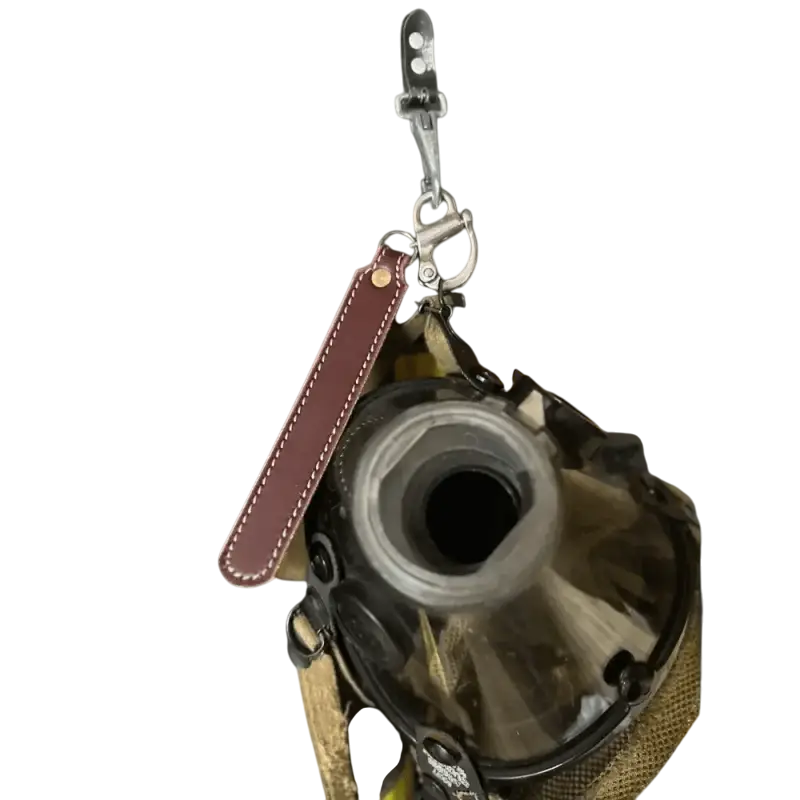
The head harness determines how evenly the facepiece is pulled against the face. Uneven strap tension can pull one side of the seal away from the skin even when the mask was correct to begin with. Adjust the harness so that the straps distribute pressure evenly, then recheck the seal every time you don the mask. You can view the SCBA quick release that works with this harness.
SCBA Mask Fit Testing Requirements
Fit testing is the step that confirms whether a size actually works for you. Fit testing requirements for tight-fitting respirators are set by federal rules, so check the current OSHA respiratory protection standard for the schedule that applies to your agency. Check your department's written respiratory protection program for the schedule that applies to your agency, since local policy can add requirements.
A fit test should happen before a firefighter is assigned a mask, and again when a facepiece changes, when a person's weight or facial structure changes significantly, or when the mask is replaced. Document each test and keep the record with the individual's protection file.
Qualitative vs. Quantitative Fit Testing Explained
There are two broad approaches. Qualitative fit testing relies on the wearer's response to a test agent, such as a sweet or bitter solution, that is introduced around the seal. If the wearer can taste the agent, the seal has failed. It is simpler and less expensive, though it depends on the person's sensitivity to the agent.
Quantitative fit testing uses an instrument to measure particles inside and outside the facepiece and calculates a fit factor (Comparison of two quantitative fit-test methods using N95 filtering facepiece respirators). It produces a numerical result and is generally considered more precise. Many departments use quantitative testing for their highest-risk roles and qualitative testing where appropriate under their program.
Either method can be valid. Your department's program defines which one applies to your situation, so ask your training officer which test your crew uses.
Facial Hair, Eyewear and Other Factors That Change Your Fit
A tight-fitting facepiece depends on a continuous seal between the mask edge and the skin. Anything that interrupts that contact creates a path for contaminated air, and the wearer often cannot feel the difference until the mask is already under load.
Facial hair is the most common interruption. Hair that crosses the seal line, even a short stubble, lifts the edge of the seal away from the skin in small gaps. Facial hair along the seal line can prevent a tight-fitting facepiece from sealing, so follow your respiratory protection program on this (the CDC). Your respiratory protection program defines the shaving standard, and you should follow it exactly rather than estimating what is acceptable.
Eyewear creates a different problem. Glasses arms that run under the seal lift the facepiece and open a gap at the temples. Frames that sit across the seal line at the nose can disturb the nose cup contact. Check for this during every fit check by donning the mask with any eyewear you would wear on a call, then performing a seal check. If you are comparing sizing before buying, you can compare turnout gear for firefighters to see your options. Confirm with your program which eyewear options are approved for your facepiece, since not every frame is compatible.
Other factors shift fit over time and are easy to overlook:
- Weight change of even a modest amount can alter how the face fills the seal.
- Dental work, including dentures and bridges, can change jaw position and seal contact at the chin.
- Scarring, skin changes or a new facial structure after injury may require re-measurement.
- Helmet fit can push the head harness out of its designed position, changing how the facepiece sits.
Because each of these can change fit without obvious warning, treat a seal check as a routine task before entering a hazardous area, not a one-time event at the time of issue. Document any change in your facial structure, weight or dental status and request a new fit test when the change is significant under your program.
Troubleshooting SCBA Mask Leaks
A leak rarely announces where it is coming from, so a fixed diagnostic order saves time and prevents guesswork. Work through the steps below, and repeat the seal check after each change so you know which correction actually solved the problem.
Start with the location of the leak as you feel or hear it. Air rushing in at the chin usually points to a seal that is not seated under the jaw, or to strap tension pulling the lower edge away from the skin. A leak at the upper edge or across the bridge of the nose more often points to the nose cup or to the upper portion of the seal. A leak on one side only usually indicates uneven harness tension or a seal that has deformed on that side.
Use this checklist for the most common patterns:
- Leaking at the chin: Confirm the facepiece is seated fully under the chin, then tighten the lower harness straps evenly. Check the lower seal for flattening or debris.
- Leaking at the cheeks or on one side: Equalize the left and right strap tension, then reseat the facepiece and recheck. A persistent one-sided leak warrants a close look at the seal on that side.
- Leaking at the nose or upper edge: Check that the nose cup is the correct model for the facepiece and that it is seated properly. Inspect the upper seal for cracks or a set in the rubber.
- Leaking near the eyes or forehead: Look for glasses arms or hair running under the seal, and confirm the head harness sits as designed on the head.
- Leaking throughout with no clear location: Suspect a damaged valve, a cracked lens or a compromised seal material. Remove the facepiece from service.
Facial hair deserves its own check at every step. Even a few days of stubble crossing the seal line can produce a leak that looks like a equipment fault. If you find any hair in the seal area, correct the shave before any other adjustment, because no strap setting will make up for a broken seal.
Watch out: Do not tighten straps beyond the comfortable, even pressure the harness is designed to produce. Over-tightening can deform the seal and create a new leak path while hiding the original cause.
If the leak persists after these steps, remove the facepiece from service and report it to your supervisor. The source may be the nose cup, the valve or the facepiece itself, and only a qualified person should decide whether it can be repaired or must be replaced.
A leak rarely announces where it is coming from, so the article suggests checking by location, as summarised below.
Leak location |
Likely cause |
First check |
|---|---|---|
Chin |
Seal not seated under jaw, or uneven strap tension |
Reseat facepiece and tighten lower straps evenly |
Cheeks or one side |
Uneven harness tension or deformed seal |
Equalize left and right strap tension |
Nose or upper edge |
Nose cup mismatch or cracked upper seal |
Confirm correct nose cup and inspect upper seal |
Near eyes or forehead |
Glasses arms or hair under the seal |
Check eyewear and harness position on head |
Throughout, no clear spot |
Damaged valve, cracked lens or compromised seal |
Remove the facepiece from service |
Booking Your First Fit Check and Choosing Gear That Fits
A professional fit check is one way to find the right size. Contact your department's training officer or respiratory protection administrator to schedule one, and bring your facial measurements with you so the technician can compare them against the sizing chart.
If you are choosing your own gear, browse the Chief Miller firefighting gear collection to see sizing options and find equipment that fits. For training, the XRT PRO 2.0 SCBA Trainer is priced at $39.99 for one pack or $159.99 for a five pack, and is compatible with AV2000 and AV3000 masks. Our advice is to confirm sizing and compatibility before ordering, and to keep your fit records with your gear.
Frequently Asked Questions
How do I know what size SCBA mask to get?
Start with a fit test rather than guessing from a chart. Manufacturers publish size guides based on facial dimensions, but the final choice is confirmed when the mask seals correctly on your face. Measure from the top of the nose bridge to the bottom of the chin and across the face width, compare those numbers against the size chart, and then verify the seal with a positive and negative pressure check. If the mask does not seal with your current size, try the next size up or down before deciding the mask is wrong for you.
What is the difference between SCBA mask sizes Small, Medium and Large?
Small, Medium and Large refer to the facial dimensions a mask is built to fit, primarily face length and face width. A Small usually suits narrower faces with shorter measurements, while a Large is built for longer, wider faces. Sizes are not interchangeable across brands, so the same letter can fit differently from one manufacturer to another. Always check the specific brand's size chart and confirm fit on your own face.
Why is a proper seal test critical for SCBA masks?
A mask only protects you if the face seal stays intact against your skin. Any gap lets contaminated air enter the facepiece, which can expose you to smoke, gases and particulates during an incident. A seal check takes less than a minute before each use and catches problems that a visual inspection misses, such as a strap set too loose or a seal lifting along the cheek or chin.
Can facial hair affect the fit of an SCBA mask?
Yes. Facial hair along the sealing surface, especially stubble, sideburns or a beard, can break the seal and let air leak in. Most respirator programs require a clean-shaven seal area for tight-fitting masks. If facial hair is part of your job or religious practice, talk to your department about alternatives before your next fit test rather than assuming the mask will seal.
How often should a firefighter be refitted for an SCBA mask?
Refit whenever your weight changes noticeably, you have dental work or facial surgery, you change facial hair, or you switch to a different mask model. Beyond those triggers, retest on the schedule your department sets under its respiratory protection program. A seal that passed last year may not pass today, so treat each fit test as a current check rather than a one-time approval.
What should I do if my SCBA mask keeps leaking?
First repeat a seal check and adjust the head harness so the straps are even and snug without overtightening. Inspect the sealing surface for creases, debris or damage, and confirm the nose cup sits correctly on the bridge of your nose. If leaks continue after adjustment, the size or model is probably wrong for your face, so report it to your supervisor and request a new fit test instead of wearing a mask that does not seal.


