


Last Updated: November 19, 2026
Quick Summary
Grain bin entrapment rescue equipment is the specialized set of tubes, barriers, augers, and platforms that trained responders use to free a person caught in flowing or settled grain. A rescue tube holds back surrounding grain while a drill-powered rescue auger removes grain from inside the protected column. Departments starting from zero should plan on a tube system plus an auger.
- The JPZ Rescue Auger weighs 26 pounds and moves grain at 1.5 bushels per minute.
- The JPZ Rescue Auger is priced at $1,350.00.
- The Great Wall of Rescue TuffKote system costs $3,200.00.
- The first response step is to shut down all augers, conveyors, and fans feeding the bin.
- Never enter a bin to pull a victim out by hand, because the rescuer can be trapped too.
Table of Contents
- Why Grain Bin Entrapment Demands the Right Rescue Equipment
- How a Grain Bin Rescue Tube Contains the Victim
- Rescue Augers and Grain Removal Tools That Free the Victim
- Rescue Platforms, Kits, and Accessories for Confined Space Work
- Grain Bin Rescue Equipment Price: What Departments Actually Pay
- Grain Bin Rescue Equipment Grant Funding and Donation Programs
- Buying Used Grain Bin Entrapment Rescue Equipment Safely
- Step-by-Step Rescue Response, Training, and Equipment Readiness
- Frequently Asked Questions
Why Grain Bin Entrapment Demands the Right Rescue Equipment
Grain bin entrapment rescue equipment is the specialized set of tubes, barriers, augers, and platforms that trained responders use to free a person caught in flowing or settled grain. Without it, a rescue becomes a race against grain pressure that can pin an adult within seconds.
The danger is not the grain itself. It is the physics of a storage structure. Flowing corn or soybeans behave like a liquid, and a worker who breaks through a crusted surface can be buried to the waist or chest before anyone reacts. Grain pressure on the chest restricts breathing, and every rescue attempt that moves grain the wrong way can pull the victim deeper.
At Chief Miller Apparel, we supply rescue gear to fire departments and first responder teams. Both matter. The right equipment buys time; trained responders use that time well.
This guide covers what each piece of grain bin entrapment rescue equipment does, what departments actually pay, how to find grant funding, and how to keep a team ready before the call comes in.
How a Grain Bin Rescue Tube Contains the Victim
A grain bin rescue tube is a cylindrical barrier that slides into the grain around a trapped person. Once in place, it holds back the surrounding grain so responders can dig the victim free from inside a protected column.
The tube does the hardest job on scene: it stops the flow. Grain continues to shift toward any void you create, so scooping without a barrier simply refills the hole. A tube or segmented wall breaks that cycle.
Our grain entrapment rescue system in mill finish uses lightweight panels that link into a tube, a wall, or an irregular shape around the victim. The basic package builds a 2.5-foot diameter tube with six panels, one step, one pipe, four platforms, a manual, and a carrying case. The TuffKote finish version offers the same panel system in a TuffKote finish.
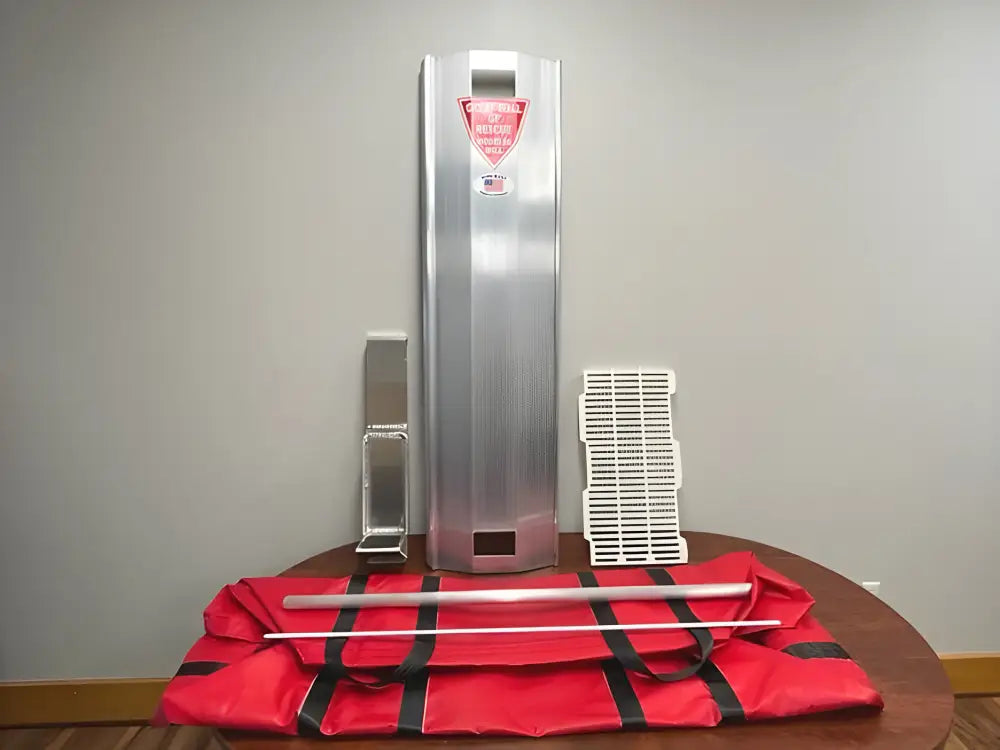
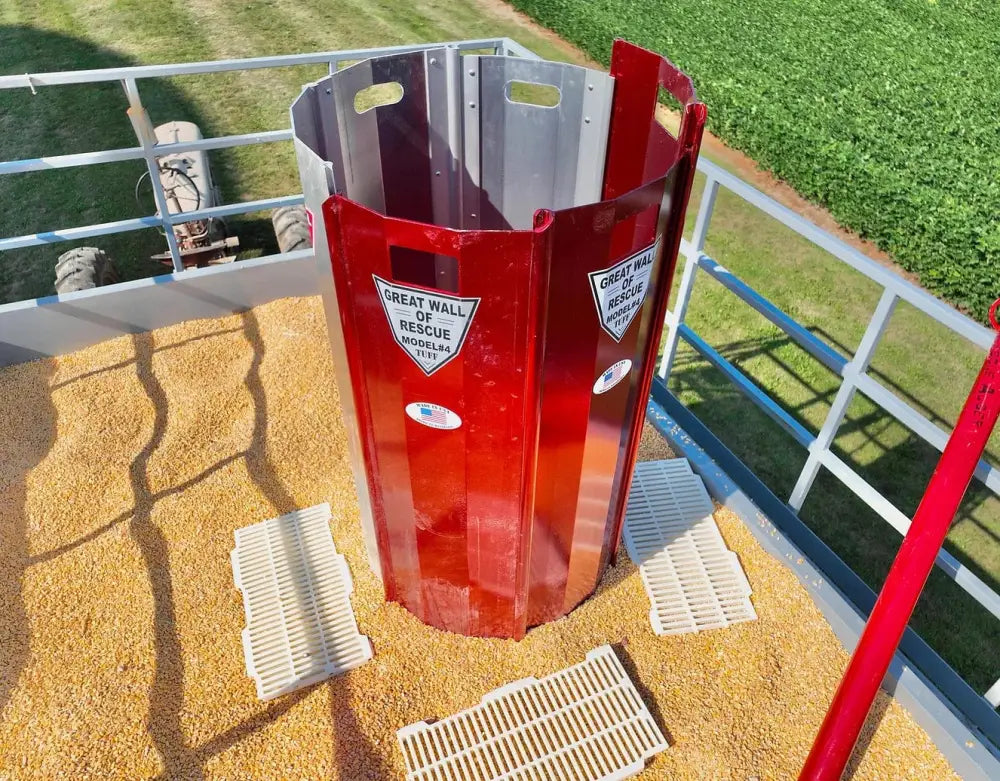
Best for: departments that want one system adaptable to multiple entrapment shapes. Skip if: your team has no confined space training, since the tube alone does not make entry safe.
Rescue Augers and Grain Removal Tools That Free the Victim
A rescue auger is a drill-powered grain removal tool.
The JPZ Rescue Auger weighs 26 pounds, runs off any power drill, and moves grain at 1.5 bushels per minute. It works with corn, wheat, milo, and soybeans, and it works with a grain rescue tube. The unit is priced at $1,350.00.
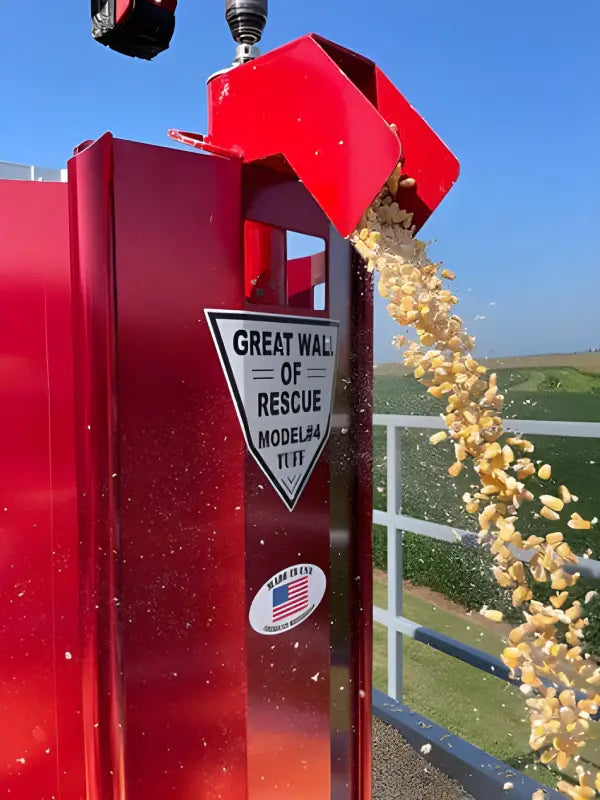
A common mistake is buying the auger without the tube. The auger removes grain; the tube keeps the surrounding grain from rushing back in. Buy them as a pair or plan to borrow a tube from a neighboring department.
Rescue Platforms, Kits, and Accessories for Confined Space Work
Kits bundle the panels, platforms, steps, and carrying cases a team needs to deploy as one unit.
Our rescue equipment collection for emergency responders includes the platform, kit, and accessory options that complete a tube and auger setup. Departments building a first-time kit should start with the full panel package rather than buying components piece by piece.
Grain Bin Rescue Equipment Price: What Departments Actually Pay
| Equipment | Typical Role | Chief Miller Apparel Price |
|---|---|---|
| JPZ Rescue Auger | Drill-powered grain removal | $1,350.00 |
| Great Wall of Rescue, TuffKote | Segmented tube and wall system | $3,200.00 |
| Great Wall of Rescue, Mill Finish | Segmented tube and wall system | $3,250.00 |
Chief Miller Apparel Price
A department starting from zero should plan on a tube system plus an auger. Teams with an existing tube may only need the auger, replacement panels, or a spare carrying case. Ask your supplier which components are sold separately before you write a purchase request.
Grain Bin Rescue Equipment Grant Funding and Donation Programs
They assemble it from grants, donations, and cooperative programs, and the departments that succeed treat funding as a project with a written case rather than a request for a check.
A common pattern is to build a one-page needs statement before applying anywhere. It should state the number of grain storage structures in your response area, the types of grain stored, the number of workers who enter those structures, your current equipment inventory, and the training your team has completed. Reviewers who see a clear risk picture and a specific equipment gap are more likely to fund a request than one that reads as a wish list.
Three funding paths are worth pursuing in parallel:
- State fire marshal and emergency management programs. Many states administer equipment grants or rescue-training funds through their fire marshal or emergency management agency. Ask whether grain bin rescue falls under an existing rescue or agricultural safety category before assuming you need a new application.
- Agricultural safety and farm organizations. Farm bureaus, grain cooperatives, and agricultural safety councils sometimes hold equipment budgets or sponsor rescue equipment for rural departments. A demonstration day at a local elevator is often the most effective way to start that conversation.
- Industry donations tied to training. Grain handlers and elevators have a direct interest in rescue capability near their facilities. Donations frequently come with a training day attached, which is a benefit rather than a burden, accept the training and document it.
Watch out: a grant that funds only the tube and not the auger, platforms, or training leaves a team with equipment it cannot deploy effectively. Write the application around a complete, deployable kit and state what each component does in the response sequence.
Community programs deserve the same discipline. When a cooperative or farm organization offers donated equipment, confirm the package contents against the manufacturer's list, inspect the panels and platforms before accepting, and schedule the training session before the gear goes into service. That same readiness depends on safe operation of the machinery around the bin, so Agri-Linc belongs in the conversation when reviewing farm tractor safety.
Finally, keep a simple funding file: the needs statement, the equipment quote, the training record, and the inspection log. Departments that can produce that file on request move faster when a grant cycle opens or a donor asks what the team still needs.
Buying Used Grain Bin Entrapment Rescue Equipment Safely
Panels and platforms take heavy handling, and a bent panel may not seal against grain flow, which means the tube fails at the one job it exists to do.
Inspect these before you buy:
- Confirm every panel is present and matches the manufacturer's package count
- Inspect panel edges for bends, cracks, or corrosion that would break the seal against grain
- Test that panels link and lock without force; a panel that needs persuasion on the bench will not seat under grain pressure
- Verify platforms sit flat and show no weld cracks at the legs or hinges
- Confirm the carrying case is intact and labeled with the package list
- Ask for the original manual and package list so you can verify completeness
- Confirm the auger motor turns freely and the drill connection is undamaged
Watch out: a used system with missing panels often costs more to complete than a new basic package, because replacement panels are sold in sets. Price the missing parts before you commit, and walk away if the seller cannot produce the package list.
Once a system is in service, new or used, readiness depends on a schedule, not a one-time inspection. A workable pattern is a pre-shift visual check, a monthly full inventory against the package list, and an inspection after every drill or deployment.
Store the system as a unit. Panels stored loose in a truck bay get damaged, and a damaged panel does not seal. Keep the case labeled, keep the manual with the kit, and assign one person to sign off on inventory after each use.
Equipment selection should also match the entrapment scenario. A tube or segmented wall system is intended for a victim trapped in flowing or settled grain where a barrier can be established around them.
The honest limitation is that no equipment purchase substitutes for trained responders. A tube and auger in untrained hands can make an entrapment worse. Budget for training and drills alongside the gear, defer entry procedures to recognized confined space rescue training, and treat every purchase as the start of a readiness program rather than the end of a project.
Step-by-Step Rescue Response, Training, and Equipment Readiness
The first step in any grain entrapment response is to stop the equipment and call for trained help. Responders should never enter a bin to pull a victim out by hand, because the same flowing grain that trapped the victim will trap the rescuer.
A workable response sequence looks like this:
- Shut down all augers, conveyors, and fans feeding the bin
- Establish incident command and lock out the equipment
- Call for a confined space rescue team and additional resources
- Assess the victim's position and airway from outside the bin
- Deploy the rescue tube or wall system around the victim
- Position platforms and assign rescuer roles
- Remove grain with the rescue auger until the victim is free
- Package and transfer the victim to EMS
A readiness check before each shift takes minutes and catches the failures that matter: missing panels, a dead drill battery, a cracked platform.
The honest limitation is that equipment cannot replace a trained team. A tube and auger in the hands of untrained responders can make an entrapment worse. Budget for training alongside the gear, and never treat a purchase as the end of the project.
Grain bin entrapment is a low-frequency, high-consequence call, and the departments that handle it well are the ones that prepared before the alarm. If your team is building or refreshing a rescue kit, Chief Miller Apparel supplies the Great Wall of Rescue tube systems and the JPZ Rescue Auger. Get started with Chief Miller Apparel and build a rescue kit your crew can deploy with confidence.
Frequently Asked Questions
What is a grain bin rescue tube and how does it work?
A grain bin rescue tube is a cylindrical barrier, usually built from interlocking aluminum or steel panels, that responders place around a trapped victim. Once assembled, it blocks the flow of grain toward the victim. Rescuers then remove grain from inside the tube instead of digging against the whole bin. Systems like the Great Wall of Rescue can form a tube, a wall, or an irregular shape depending on the entrapment scenario.
How much does grain bin rescue equipment cost?
Pricing varies by system. The JPZ Rescue Auger runs $1,350.00, while the Great Wall of Rescue system is $3,250.00 in mill finish or $3,200.00 in TuffKote finish. Departments should budget for the full kit, not just one tool: tube panels, an auger, platforms, a step, and a carrying case.
Can fire departments get grants for grain rescue equipment?
Yes. Departments commonly pursue federal assistance programs and local grain cooperative or agribusiness donation programs to offset equipment costs. Applications are stronger when you document the number of grain bins and elevators in your response area, call volume, and training plans. Start the grant cycle early, since award timelines often run several months.
Is used grain bin entrapment rescue equipment worth buying?
It can be, with conditions. Inspect every panel for bends, cracks, or corrosion, confirm all pins, steps, and platforms are present, and verify the manufacturer still supports the model. Ask for the original manual and service history. Avoid systems with missing proprietary parts, since replacements may be unavailable. A used tube that passes inspection can stretch a tight budget, but never deploy gear you cannot fully trust during a rescue.


